
After a year and a half of hard work and dedication, the Polus Center's Blind in the Baystate saw its first public showings! This film, produced by Polus staff and interns, aims to explore the blind experience as it crosses generations. Voices young and old speak on their experiences with navigating disability, the social barriers they encountered, and the community that uplifts them.
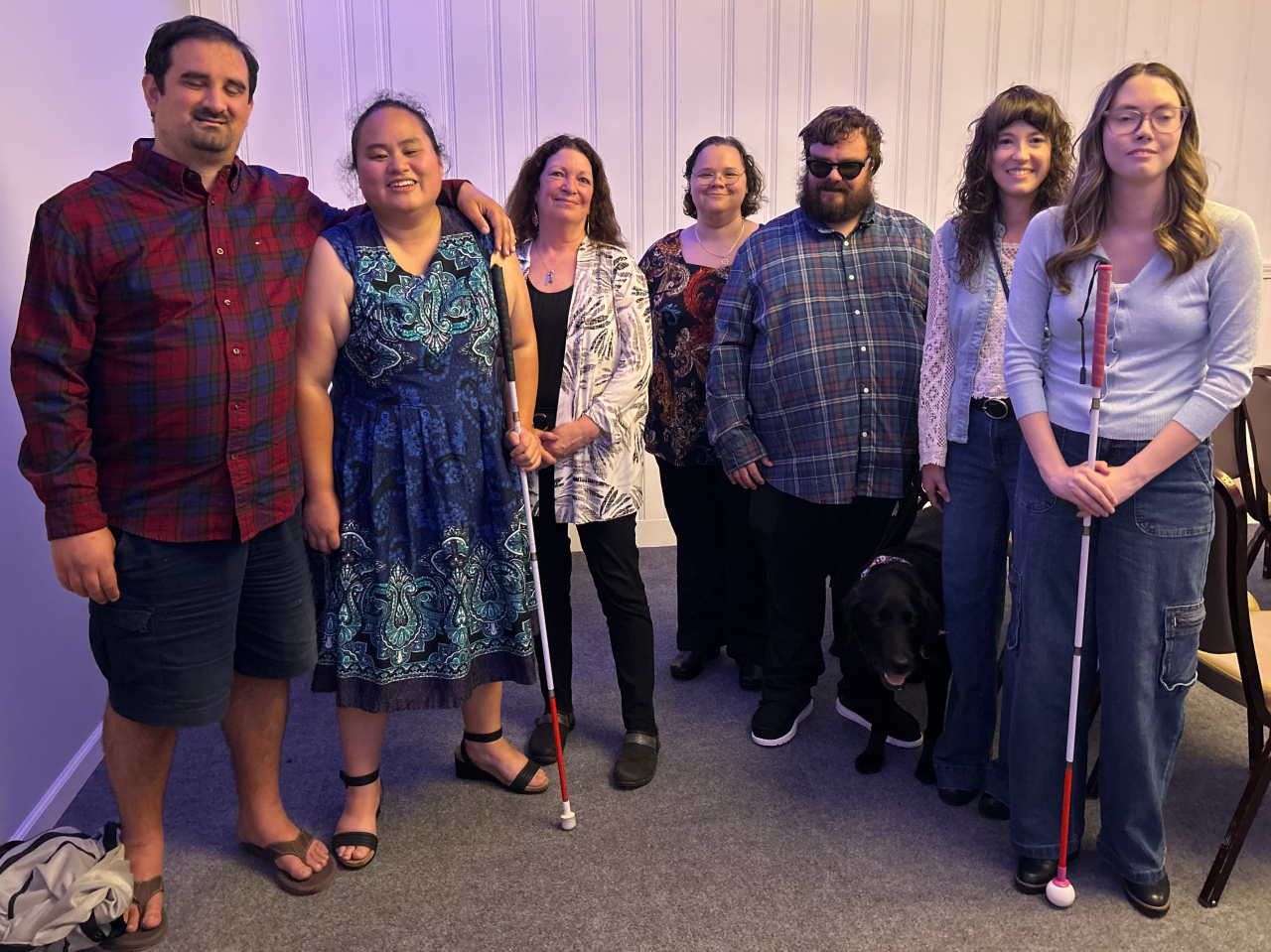
Polus met film director Victoria Ledger when she was a student of our Envision Success Project (ESP) in 2017. That summer, she and her sister created a short firm about the Fruitlands Museum, which sparked a love for film making. "Working on this documentary film is a full circle moment for me," Victoria said of her experience on this full-length documentary nearly a decade later. "On this project not only was I the filmmaker, but I got to work with Josh and Katie to help them turn their vision into an amazing documentary film. There are so many things I love about the film and this project, but my favorite part was mentoring the students."
Cullen Gallagher, a Vision Towards Success intern who helped with research and interviewing, said, "Blindness history has always been important to me, and I believe it is essential to understand where we came from and how things have evolved."
Decisions around identifying speakers, developing questions, evaluating equipment, and finding recording locations were are made with accessibility in mind for both the crew and the audience. "There were many moving pieces, and having the opportunity to work alongside the team, contribute feedback, and help make those decisions was an incredible learning experience. I loved being part of this project and appreciated everything I learned; valuable skills and insights that will continue to benefit me into the future," Cullen said.
Hear From the Producers
Here's what co-producers Josh Pearson and Katie Crocker have to say in their own words.
Josh Pearson
Working on this film taught me lessons about perseverance, teamwork, and the importance of shared history. I wanted to share my love of disability history with younger students who might not be aware of the importance of services, and how laws protect our full participation in life. I believed we needed a film to explain blindness to people who are brand new to it, as a factor in their own lives, or in the lives of somebody that they know.
I had high hopes that this film would be able to accomplish both ends, a vehicle to teach disability history and the importance of our continued advocacy and struggle for civil rights, and a tool to educate new people about blindness. It felt particularly timely as older mentors of mine have begun to pass away, making it even more important that we captured people’s stories.
None of us realized how long it would take to produce this film. I came into it with 15 years of radio and podcasting knowledge so I thought it would be straightforward. Recruitment of students, staffing changes, coordinating schedules and conducting the interviews around the state -- this film taught me so much about myself, my leadership style, and how to work towards a shared goal.
We all laid our individual visions of what this film should be aside during the editing process to allow the story to take shape naturally. It took lots of work editing roughly 70 hours of footage down to the final product - hard to choose which stories to tell and which to leave out. We could’ve produced a film easily three times as long and wouldn’t have even scratched the surface.
I learned when to step out of the way of the story, and that the interview subjects have said everything that we had hoped they would to educate the wider world about the blind community and what is important to us. It reaffirmed my belief that advocacy and technology are paramount to our success, and that we must continue to push for greater access to the world, because that is what leads to our full participation in society. I’m excited to get this film out into the world, and to watch people learn from everything that our interview subjects have to say.
Katie Crocker
When we first began working on this film, I was eager to get to work and share stories from the blind community. As a lifelong member of this community myself, I owe many life lessons to folks just like those we interviewed. Creating this film taught me more than I could have imagined, not just about my friends, colleagues and neighbors, but also about bringing a shared vision to life. This project was a true labor of love, and I feel deep gratitude for the funding that allowed us to begin this process.
A core goal for the film was to appeal to all audiences. For sighted viewers to learn a bit about some of your neighbors who happen to live with vision loss, and to see the deep community connections and services that make this state a great place to live. My wish is that the next time one of our sighted viewers encounter a blind person that they see them as a fully functional member of society rather than someone in need of charity. For those living with visual impairment, I hope they find solidarity in the stories shared here. For viewers new to vision loss, I hope this film provides hope that with comradery and support you can achieve anything.
I would not be who I am today without the advice, advocacy and support of mentors across the generations, several featured in this film. As the years pass and I’m able to fill this role for younger generations myself, I’m reminded of the words of those who helped me. Sadly, as the years pass and people grow older, it becomes even more crucial for us to capture these words of wisdom. This film gives a glimpse of the next generation of young leaders who have joined this mission, and we can expect great things from all of them.
Working with a team of young people living with visual impairments felt incredibly poignant; we watched them connect with our guests and the stories they shared. There were important lessons about filmmaking. The logistics of film locations, crew and equipment, travel, demographics, and arranging interviews filled our early days, and while the work seemed unending, our film days soon produced well over 50 hours of footage. Each guest told their story with candor and bravery, leading to some incredible content. Our greatest challenge was narrowing down the most important pieces to create a cohesive story. We still have so many incredible stories and words of encouragement that couldn’t make it to the finished film.
We feel excited to share this message with audiences across the state, and believe that with increased education, awareness and support, we can continue the important conversations that lead to true community inclusion for all residents.
Funding
This project was made possible with funding from Mass Humanities, which receives support from the Mass Cultural Council and the National Endowment for the Humanities. The public viewing is supported in part by a grant from the Barre, Greenfield, and Quincy Cultural Councils, local agencies supported by the Mass Cultural Council, a state agency.