Speaker 1: Forward. Forward. Left.
Speaker 2: By the door.
Speaker 3: There are over 4 million working aged blind and visually impaired people in the United States. And over 2 million of these people are unemployed. This is a staggering statistic, but many people defy these odds and are happily and gainfully employed and we wish to share their stories with the world.
Elana Regan: Hello and welcome to Vision Towards Success, the podcast that highlights stories of career development and lived experience. This podcast is brought to you by the Polus Center for Social and Economic Development. In our program, we feature employment success stories from visually impaired individuals for people with disabilities and their allies in hopes of showing just how smart, hardworking, and capable this diverse community is.
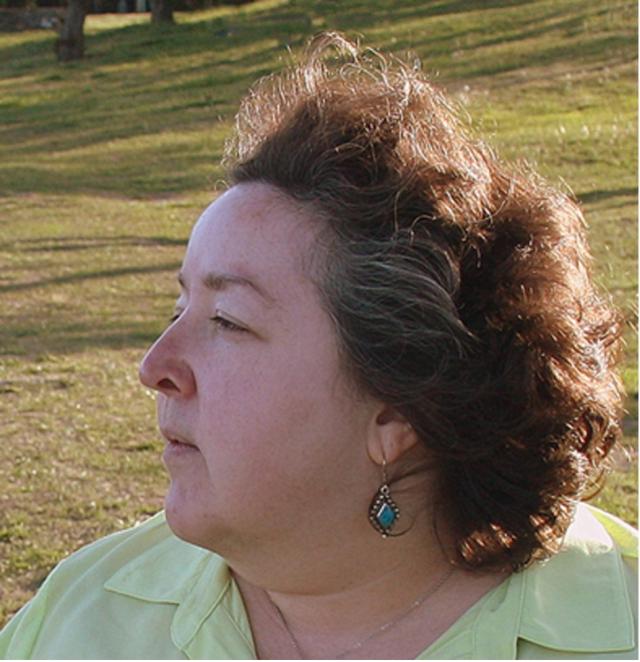
Welcome back to Vision Towards Success. In today's program, we will be interviewing Ann Chiappetta, a former trauma counselor with VA and author. With Ann's help and guidance, we will learn more about trauma and how vision loss can affect mental health. And with that, I'll hand it over to our interviewer, Chantale Zuzi.
Chantale Zuzi: Ann, thank you so much for taking the time to be with us. My name is Chantale Zuzi and I am going to be your interviewer today. It's really a privilege meeting you.
Ann Chiappetta: Hi, Chantale. Pleasure being here. I'm excited and I hope we have a lot of fun today.
Chantale Zuzi: Can you tell us about yourself, where you grew up, and where you went to school?
Ann Chiappetta: Yes. I am from New York. I'm grew up in a little town called Mamaroneck, and a lot of people find it really hard to pronounce it, but it's in the Lower Hudson Valley in Westchester County. That's a little seaside town. I was born in 1964, so I went to school, first I went to a Catholic school for a little while, then my parents divorced and we moved, so I went to public school and that was the best thing that ever happened to me. I loved public school when I totally did not like Catholic school.
And so I went to public school in New York until middle school. And then I did my freshman year of high school in New York. Then my mother remarried and we moved out to Northern California near San Jose in a town called Campbell. And I started 10th grade in public school in California. And you want to talk about culture shock?
I had had to do a lot of adjusting and back then I had low vision, but I was not yet legally blind. So I wore very thick glasses, but I had all of the beginning signs of retinitis pigmentosa, so couldn't see at night, bumped into things, had no depth perception, and I actually never drove a car even though I took driver's ed in school in California, I almost made us crash more than once. And then after that I decided, "I don't think I should be driving."
So in school I gravitated towards music and English and the arts. I was always very much interested in art classes. I would cut class for math and history, but I was always there for English and art. I'm the youngest of three girls and one sister lives back in New York with me because I moved back to New York in my 20s from California. And the other sister who followed us out originally she stayed and now she's a teacher in Northern California.
So my dad did remarry and I have a half sister who lives in Mamaroneck. Been married for 30 years. My husband is a Navy veteran and he currently works as a customs officer.
Chantale Zuzi: And how was it growing up with family members? As you mentioned you have sisters and how was it?
Ann Chiappetta: I was the youngest and my two sisters were a lot older than me, six and eight years older than me. So I was always the baby. Sometimes I felt like I was the only child because my sisters are so much older and doing things so far ahead of me that I always felt like, "Oh, I'm doing this on my own." I was very independent but it was also kind of isolating as well.
Chantale Zuzi: Speaking of school, what's kind of assistive technology did you use in school
Ann Chiappetta: Back then in the early 1970s, there wasn't really anything for me to use. When I started wearing very thick glasses, I was wearing them starting in kindergarten and they were so thick and so heavy and they were made out of glass back then, not plastic. So they would always make marks in my nose or behind my ears, I would get rubbed raw. So I always wanted to take them off because they were not comfortable. And even though they made me see better, they never really made me see clearly.
I remember as a kid if we were doing something like jumping rope or I was doing something, an activity of some kind, I would have to take off my glasses and put them in a safe place and then go and do what the other kids were doing. But that also meant I couldn't see well everything was blurry so I had to make choices back then. Whether I wanted to risk my glasses being broken by doing what I was doing or put them away and not being able to see. And sometimes that resulted in me getting hurt or falling or whatever.
I felt that my vision loss at the time was an extremely limiting thing for me and many times it was as a kid it wasn't until later that I started getting choices. So when I would read in school when I was young, I always had the book like this up against my face because there was no large print back then. They never identified me as a child who had a vision impairment. So that kind of is really what followed me through most of my early education at elementary school and leading into middle school.
And in middle school there were kinds of things that I couldn't take part in toward sports and stuff because I couldn't track the ball or a couple of times I remember playing basketball and the ball hit me in the face and my glasses broke. So that was the end of that. And it wasn't until I was in high school that large print books and textbooks became a little more readable and there was some magnification tools that I could use.
And sometimes I did use magnifiers and stuff, especially in art. My art teachers were very good at helping me adapt whatever I needed to do art, whether it was painting or line drawings or things like that. But I didn't really have anything adaptive labeled as that growing up. It was kind of just figure it out on your own.
Chantale Zuzi: How long did it take for you to adapt once you lose your vision?
Ann Chiappetta: I think I was adapting all along from the time I started getting glasses. But I think sometimes I got a to rest about it. My vision would get worse and then it would get stable, then it would get worse and then it would get stable. And I had a long period of time where it was the same and I'm really very glad about that. It really helped me just be a person and not have to worry about my vision so much. And that was from the time I was around 12.
And then in middle school it was kind of the same, then it got a little worse and then it kind of stayed the same until I was out of high school. So that was a good thing because I didn't have to worry about it. But I was just trying to just be a teenager and try to get a job and go to school and do all the regular normal things my friends were doing without having the burden of saying, "Oh. Well I don't know if I could do that because I can't see."
So the adapting came in stages for me and up until a few years ago when my vision finally got to the point where I really don't rely on it anymore, that's when I think the adapting part became less of a priority.
Chantale Zuzi: And did you know anyone who was blind or visually impaired in your community?
Ann Chiappetta: There was one other girl when we were still living when my parents were still married and she had low vision as well and she wore really thick glasses and we would both have our nose in the books and I actually did, so funny, I did contact her again after I got married and had kids and we reconnected for a little while and she was still having vision problems just like me. But then we lost touch when I was in my 20s. So I don't really know anybody. I was the only one. At least that's what it felt like.
Chantale Zuzi: And did you work during your college days and how was it finding a job while being visually impaired?
Ann Chiappetta: Oh, I didn't go to college until I was older and I had stopped working when I first got diagnosed with retinitis pigmentosa when I was 28. So I was working until I was 28 and then I stopped working and had my children and then when I wanted to go back to school, I was already visually impaired, legally blind, all that stuff. It's not easy to find a job when you have a disability. And I remember so many interviews that soon as they saw me walk in with my white cane, the interview was over before it even started.
And I knew just by the way they treated me and that was just so disheartening. But I didn't give up. So you just can't give up because a door closes, another one opens and that's what it's been like for my whole life.
Chantale Zuzi: And what did you major in college and why?
Ann Chiappetta: I became a family therapist. So I received my master's in marriage and family therapy and I chose that because I didn't want to be a social worker necessarily and I didn't want to be a psychologist either. And the reason why I didn't want to become a psychologist because I was very fearful of the math requirements to become a psychologist. I wanted to be in the room with people, I wanted to help heal people and that's why I thought the family therapy was the best fit for me.
Chantale Zuzi: Wow. And how has it been for you to work as a trauma counselor for combat veterans and their families?
Ann Chiappetta: Well, the overall experience has been extremely gratifying, but it was also extremely difficult. Took a lot out of me personally. There's a lot of self care you have to be invested in when you hear trauma day in and day out. And especially trauma from war because there are a lot of facets of it that are violent and bloody and just dehumanizing. And you have to be ready to be able to be a vessel for that. It's a gift you give to somebody to be a therapist.
Chantale Zuzi: How has working with people who have experienced different circumstances has really changed your view of the world?
Ann Chiappetta: In a lot of ways, because I've heard so much trauma, when I choose to be involved in the news and know what's going on in the world, I'm very careful about what I do watch and what I do read because I don't want to be overwhelmed like I was when I was a trauma counselor.
I want to concentrate more on the good things. I want to make every day count. I want to make my life matter. I want to stay connected with people more. And that's why I've really focused on my writing and my poetry and getting out there and making presentations and just being with people.
Chantale Zuzi: Well, it's really challenging the work that you do, but what kind of self care do you provide for yourself?
Ann Chiappetta: Oh, I love to read. I love to play with my dogs. So I have a guide dog and a pet dog and I get really excited about that new poem that I have in my head. I want to write it down. I call my sister and we talk or I send an email to a friend. It's important that I stay connected with my friends and family because they're my support and I get a lot of energy from them. I also, I like to cook and I do meditate.
I do make sure I take at least 20 minutes out of every day and just sit with myself and breathe and clear my head. And I find that that is probably the most helpful thing, especially when I'm feeling concerned about something. So very simple things, but things that help my mind kind of relax.
Chantale Zuzi: Do you work in that field currently?
Ann Chiappetta: I retired as a trauma counselor in 2019 and of course then COVID hit. Like everybody else. I was kind of lost, there was a big pause in the world and I had that time to figure out what I wanted to do next. I decided that I'm going to invest in being what I've always wanted to be, which is a writer. I've independently published four books, but now I want to step it up and I'm currently looking for an agent to find places where I can publish my work.
I also do presentations on a number of different things and I was doing them up until COVID and now that's picking up again. So I was going to the public library and getting involved in, they have poetry slams and stuff like that, they paused them. So now that stuff is starting to pick up again. So I'm really excited.
I want to get back into performing my poetry and getting out in the community and visiting those kids at school and telling them about what it's like being blind. And I think that's what I want to do. I just want to be who I am and stay connected and have fun.
Chantale Zuzi: Okay, so why writing? Why are you so passionate about writing? Do you mind telling us?
Ann Chiappetta: Oh yeah, I've always loved to write and it started in I think middle school and my English teacher really liked my poetry and everything and it's always been something in the background for me.
When I was employed, before I started losing my vision, before I became legally blind, I was a designer of acrylic furniture and it was very creative thing for me. So the creativity, it's always been a priority for me. And when I lost my vision, my ability to do those things kind of, well they became very frustrating and very difficult for me. So I put a lot of those visual arts away and then one day I started writing poetry and writing out how I felt about losing my vision.
Those poems became the first poems that I got published. And when I went into college I took a lot of literature classes and I was very good and a lot of my professors took me under their wing and helped me and it just became part of the new way I create. So I had to say goodbye to the visual arts, but I had the literary arts to compensate for that.
Chantale Zuzi: This is a fun part really. I wanted to learn more about your books, especially that I've read some and I would like to know what is your favorite book in all the books that you've written and why?
Ann Chiappetta: It was probably be the Follow Your Dog book because I talk very frankly about my disability in that book and I think that's really important. And that was really difficult for me to be that candid in that way. So that to me was the hardest book to write and I think that's why it's my favorite.
Chantale Zuzi: Speaking about the effect of COIVD-19, I know the whole world was affected by this virus and as you mentioned it's also affected you. Would you mind elaborating a little bit about how COVID affected your work?
Ann Chiappetta: Well my husband, since he works at an airport, I was worried about him a lot. What he was being exposed to. By that time I had stopped working so I was at home and I didn't feel as worried for myself as I felt for him. It was really hard not being able to see anybody for a long time, but I didn't think I actually had it any more or less difficult than anybody else.
Chantale Zuzi: I learned that you are also an advocate for people with blindness and visual impairment. How has that been for you? Are you doing that advocacy right now or was that affected by COVID as well?
Ann Chiappetta: That was very much affected by COVID. I was going into elementary schools and presenting a program called Building Bridges for kindergarten and first graders and I haven't been back since. I think we did one, it was in February right before, and I haven't been doing one since, but they're going to be picking back up this year.
And so disability awareness presentations with kindergarten and first graders are awesome. They are great. The questions they ask are wonderful. They don't have that fear of asking the wrong question like adults do. So they ask any question at all. And that's wonderful because you want them to ask questions, you want them to ask what's it like for this or what's it like for that? So those things I'll be doing.
I try to advocate, when asked, in our local blindness group or sometimes I present to an agency here called Visions and they have a training center in Rockland County. Sometimes I go there and I make presentations about what it's like to be a writer who's blind or how I got my degree and what obstacles or things help me get it.
Chantale Zuzi: And how accessible is the industry that you work in writing? And also looking in the past while working as a therapist?
Ann Chiappetta: When I was a therapist we had a licensing test to get your marriage and family therapy license to practice in New York. And the first test that I tried to take right after I got my internship with the veterans, it wasn't accessible, and I had to fight for that and it took three years for me to fight with New York State to make the test accessible in a format that I was requesting. But since then, it's totally accessible now.
So I wasted three years of letters and legal assistance. So that was really disheartening. It was ridiculous. But that's what happens sometimes. And the writing world, well some things are accessible and in terms of text to speech technology and stuff and something still are not. And I think the choices that you have as an assisted technology user, we have so many more choices now and so many different ways to accomplish a task.
And that's because technology keeps advancing and we keep making sure that we tell them, "Well you want to make something new, you have to make it built in with accessibility." And that kind of design thought is going to be leading the future. So I'm really happy about that.
Chantale Zuzi: And are there other people with disabilities at your workforce right now?
Ann Chiappetta: I still keep in touch with the disability community of course because I'm an advocate and that's always something that I'll do. I do have a good friend who's the executive director of an independent living center and she does employ people with disabilities in her center. And that's one of the things that independent living centers do as a general rule is they hire, when they can, they hire people with disabilities to perform the jobs that they need and the tasks that they need.
So in a broad sense of, do I know other people with disabilities who are employed in similar roles? Yes, but when I was working for the Readjustment Program for the VA, I was the only blind counselor among 3000 people. So I do think that in some sectors, especially in federal service sectors of civil service, I think people with disabilities are vastly underrepresented as employees.
Chantale Zuzi: How did you overcome your obstacles as a blind or visually impaired person and what advice do you have for the listeners who may or may not have a disability today?
Ann Chiappetta: When you asked me that question, I thought about the first time I used a white cane and the instructor came in my home and she handed me this cane that was kind of like a golf club. And I was still in denial over my blindness. It was still very raw with me. I didn't want to admit I was blind. I didn't want to have to use a cane, but oh boy did I fall a lot and bang into things. So she gave me this white cane and I'm like, "I really don't know."
And so she taught me how to do some things in the house and how to get my rhythm going with my cane and everything. And we went outside and I, little by little, I learned how to use my cane. And I think that was the moment where I realized, "You're blind and you've got to figure this out. You've got to accept it and you've got to do whatever you need to do to be able to help yourself do what you need to do in life."
And it was really tough. And I understand when other people say, "I didn't want to use my cane." I was cane resistant and anybody listening now, I understand that I went through that too. But there's also this rainbow effect, at least that's what I call it. You start on one end and you walk that rainbow to the other side and you come out of it and you say, "I am so glad that I stuck with it. I'm so satisfied with my ability to be able to be independent and mobile on my own and be safe on my own." Not fall down holes or trip over things or that kind of stuff.
So that white cane is your independence and if you choose to get a guide dog after that, that's even better. But you have to start somewhere. You've got to allow yourself to heal the loss and move on. And that's the way you gain independence through any disability. It doesn't matter whether you lose your vision or whether you are living in a wheelchair after amputation. You've got to allow yourself to heal and you've got to be able to give yourself a chance to live again.
Chantale Zuzi: Thank you so much for sharing your inspiring story with us today. It was an honor speaking with you.
Elana Regan: Hello and welcome back to Vision Towards Success. I'm Elana Regan and in today's episode we interviewed Ann Chiappetta, a former trauma counselor with the VA and published author and poet. My colleague, Katie, and I were able to catch up with Ann after the interview to delve deeper into the emotional side of blindness and how vision loss can affect a person's mental health.
Vision loss is a journey that many individuals have to adapt to, whether it be as a child, adult, or a senior losing vision at any age is difficult. In Ann's case, she was living with an eye condition called retinitis pigmentosa. This is a genetic condition that causes progressive vision loss. The symptoms usually first occur in childhood and progress to eventual blindness.
This meant for years Ann was dealing with vision difficulties that eye doctors and teachers could not explain. And this presented a problem for her at school. Ann started her education in Catholic school where they did not understand her needs. She eventually transferred to public school, which she emphasized was a game changer for her.
Ann Chiappetta: I went to parochial school and it was not a good experience for me. Back in the early 70s, it was all nuns and they were very strict and I had many things going against me. First I was lefthanded and before I had my glasses I couldn't... They thought I was stupid because I couldn't do the vocabulary and I couldn't see the board. So every time they would ask me how to spell a word I wouldn't know and they told my parents that I was, I hate this word, an imbecile, "Your daughter is dumb."
And then my dad actually told them that when she reads a book, she reads really close like this and they go, "We don't allow her to do that. That'll ruin her vision." So when my dad said, "Yeah, I think she needs to go and see the eye doctor." And that's when they diagnosed me and I got those really thick glasses in the second half of kindergarten.
And that was just like I put them on, I could see the board and then I started reading and I ended up accelerating and they realized that I wasn't stupid. And then first grade was kind of the same thing but a little different because they didn't want to put me up in the front row because my last name began with an R, they wanted sit me in the back and my parents had to come in and fight to get me to put in the front row so I could see the board.
So it was like that. And then when I got to public school in third grade, it was so different. I got an English teacher who wrote with his left hand and told me, "Write any way I want." It was amazing to me. I mean, I would never learn these things in parochial school.
Elana Regan: Oftentimes when children begin to lose their vision at a young age, the adults in their lives, like teachers, parents, and even eye doctors can think they're faking it for attention. Teachers can think we have cognitive disabilities and don't even give thought to vision impairment.
Having adults discount a child's reality can be detrimental to their mental health. The child can believe that addressing their concerns will not help and that the adults in their lives do not care for them. Dealing with the trauma of vision loss as a child is difficult even with a support system. But when that support system doesn't even believe the child's losing vision, the trauma is even further amplified.
Many people assume that vision loss is not a trauma if you knew it was coming. With many conditions, like Ann's, people know they'll eventually lose a majority of their vision. People generally understand that if you were suddenly blinded in an accident, that would be traumatic, but somehow do not see that the gradual loss of vision is a trauma as well.
I like to think of it like a company who is losing money, whether that company loses it all at once, or in little chunks over the years, the financial struggles are still present in both scenarios. The same is said for vision loss and its related trauma.
The trauma of vision loss is valid and can be very hard to deal with. And because of that, we asked Ann if the emotional trauma she faced because of losing her vision helped her connect to the vets she was counseling.
Ann Chiappetta: Yeah. I think that that helped me have a softer feeling for people who were going through loss of whatever. It helped me connect with them more. It did.
Elana Regan: As we have mentioned, vision loss is difficult to adapt to. And because of Ann's background as a trauma counselor, she decided to give some advice to those who are going through vision loss or other challenging situations.
Ann Chiappetta: Just my first thought is to never give up hope. And if someone says, "No, you can't do that." Find another way. Don't let somebody else take your dreams away or take away that feeling of, "I can do this, I just have to figure it out, find a different way."
And to try to find support for your loss and for your grieving process because it is, you're grieving through a significant loss. And if you can find an individual therapist or you can find a group of people who are going through similar things, that's really, I would say, is probably a pivotal key for how well you adjust from that point to the future.
I didn't have my therapist until much later and I wish I would've had the therapist at right at the beginning. It probably would've helped me move through the transition even more softly without as much emotional duress. Find help, ask for help, and don't ever give up hope.
Katie: And I think it can be tricky to find a therapist that can assist you through that. I've been looking for such therapist for years and I haven't found one. I found folks that specialize in chronic pain and things like that. But to find somebody that can assist with this type of feeling that we go through, it's tough.
Ann Chiappetta: I almost want to say the therapist has to have some personal insight into that kind of thing. There is transference and stuff that goes on with the therapist, but I think if they have a deeper understanding, I think that'd be very helpful. But you're right, finding the right therapist is tough.
Katie: Another idea that kind of goes on that wavelength, this idea of being a guide dog user and going through the O&M training, the cane, and that sort of thing. The whole idea of guide dogs came through assisting veterans coming back from war that were blinded in war. And so that's kind of a shared experience.
I don't know if you know a lot of folks who have gone through that process and ended up really going through the transition and coping with blindness as a result, is that something that you've experienced and networked with other people?
Ann Chiappetta: Oh, you mean with veterans?
Katie: Yes, With veterans that I'd say particularly have dealt with the blindness issue. I know that you've been an active member in communities like that. Have you come across folks like that?
Ann Chiappetta: I find this really interesting. I worked at my vet center program for eight and a half years and I only met one veteran who was visually impaired
Because the way the VA handles blindness for veterans is they give them specialized programs and they go through specialized training through different VA hospitals that are set up for it. So my particular VA and VA hospital, while they had a vision department for low vision or vision loss for veterans with prosthetics and all of that, I would never really counseled any veterans that had vision loss because they were handled in a department of all their own and they had social workers there and therapists and all the mental health people within that.
So it wasn't until I started volunteering on a committee for blinded guide dog handlers that I met other guide dog handlers who were veterans and were either blinded through their service or blinded after their service. But that never happened because I worked at the VA. That happened because I was a guide dog user.
Elana Regan: Oftentimes blind people are grouped into special schools or institutions specifically for the blind and visually impaired. These institutions can certainly help blind people learn how to live, learn, and have a community. But they can also give sighted people a notion that blind people cannot support themselves and that they are vastly different from other people.
This of course, is not true and blind and visually impaired people are successful in all different types of schools and programs. And we are just like our sighted peers.
For those who do not go to a school for the blind, it can be very isolating. Most of these students have never met another blind person. And because of that fact it can be hard to navigate social situations at school. As a community, we need more places to come together and share experiences, stories, and advice. The problem is the platforms for us to use are not widely known of.
Ann Chiappetta: Our little council here in Westchester, we try to do as much outreach as we can. And once in a while we'll gain one or two people will come into our group and come to a meeting and go, "I never knew you existed and I've been living here for 28 years." And I think we should do more of that.
So we try to be as social as possible. We always end up learning from each other or being inspired by one another or being there to just listen to each other. And that's really important to just manage your disability.
Elana Regan: Having an outlet to discuss problems and issues that we face as blind people is important because we deal with ableism and oppression on a daily basis. Ableism is the discrimination against someone with a disability based on the theory that people without disabilities are superior. Issues around ableism have been going on since the beginning of human civilization, but it has only recently been regarded by society as an issue.
Like many other minorities, we as disabled people have to deal with microaggressions. A microaggression is a statement, action, or incident regarded as an instance of subtle or unintentional discrimination against members of a marginalized group.
An example of this could be when people ask a person's companion a question instead of the disabled person. Or when people ask a person with a white cane if they should be out on the streets alone. In many of these situations, people do not realize they're doing something inappropriate or offensive. They just don't understand.
Ann Chiappetta: And I think of microaggressions as I know it when I hear it, but I don't know if I can really express what it is or give a concrete example. But I know from the way my stomach tightens and the way I feel uncomfortable, that that probably was a microaggression.
And we talked about this in our state affiliate, especially when you're at hotels or you're in public, you know when it's happening, but you may not, as a person who is hearing this may, "Was that an insult or was that?" Whatever. You're not prepared to respond to it because I guess we're so shocked or put out by what you just heard, you're processing this. "Did they just really put me down in a way? Go help the blind lady?"
Well, I really don't like being called a blind lady. I have a name and sometimes I'll say that, "My name is Ann." And then that'll stop everybody in their tracks like a bubble of molasses. They're like, I don't hear anything from them for a couple of seconds. And I know they're probably going, "Oh my God, what do I say?"
Whatever. So when it happens, it's really uncomfortable for everybody and people don't really know that they're doing it. I think
Elana Regan: It is tiring to have to face these micro aggressions on a daily basis and educate the world about blindness. We just want to be treated like people.
Ann Chiappetta: Well, I know some people that I've talked to in my particular blindness group, they talk about how they're tired of having the burden of educating people. And I agree with that. It just happened to me the other day in the doctor's office. It was a new doctor's office, never been there.
So I was like, "Could you just orient me a little bit?" And she says," Well, I'll take you to the door to the back." And I didn't have my dog and I just had my cane. And I said, "Okay." She didn't know what to do. I said, "Well, I'll take your right arm if that's okay?" "Oh. Okay. Yeah."
So it's just, I don't know how much of that will actually change. And that's not a micro aggression at all. That's just ignorance. Yes. They just don't know what to do. And then you go into some places and they know exactly what to do and it's so nice. You relax. That whole hypervigilance piece just goes down to nothing. And you could finally relax and just be a person.
Katie: One thing that comes to mind when I'm out in public is somebody grabbing my cane or my dog's harness and trying to pull me in a certain direction without saying anything.
Elana Regan: Can you imagine how it would feel if you were just traveling, minding your own business and a stranger grabbed your personal property without asking and started dragging you in a random direction? I bet it wouldn't be pleasant.
This is how we, as disabled people, feel when you grab our surface animal or mobility tool. These tools are a part of our personal bubble. And just as you wouldn't like somebody grabbing your body without asking, we don't want you grabbing our tools, which are extensions of our bodies. Having to educate the public about these facts daily can lead to burnout. And we asked Ann if she had any advice for those struggling to balance the educator role in their lives.
Ann Chiappetta: I didn't even know I was being an advocate until somebody pointed it out to me. I was just speaking up and just sticking up for myself or sticking up for somebody else. I think that was one of the things that I was doing first, I was advocating for other people, not necessarily myself. And sometimes sticking up for myself is actually harder than advocating for someone else. But I've learned to even that out.
Especially because when you go into a school and you're talking about what blindness is and how it can feel sometimes and stuff, you're leveling that out. You're potentially creating advocates in those little minds. Get them when they're young because that's how [inaudible 00:43:57].
But if you're an older person and you've had vision all your life and then you suddenly lose it, or you have macular degeneration and stuff and you've had to give up your driving and all that, that's when I think there's got to be more support for somebody, I think they need to learn from somebody else who's already been doing that. And a lot of that it takes time for someone to build up that level of confidence, to be able to advocate for themselves, especially when they haven't necessarily had to until a certain point in their lives.
And in terms of burnout, I think you just got to choose your battles. We tend to do that in life anyway. Is it really worth it or not? And why we have to be able to balance that in our lives
Elana Regan: Along with being advocates and educators to those who are not visually impaired. We also meet and support those who have had a recent vision loss. A sudden loss of vision can be difficult to adapt to and can be hard to accept emotionally.
As someone involved in the mental health profession, Ann emphasized her disappointment in the disregard for mental health support during blindness rehabilitation.
Ann Chiappetta: Yeah, I could go a whole nother hour about how there's not enough mental health support for people with vision loss right here just in Westchester County. We've had a whole shift in what service means for blind and visually impaired people in Westchester. It's politics. It's money. But the bottom line is there are people that are not getting served and are falling through the cracks and especially older adults.
And then we have all of this, supposedly we have these funds that are being held up in Albany for ALP and everything, and why that isn't happening? And then we hear about people, older adults in nursing homes, who suddenly have macular generation issues and can't even use a telephone and they're not being served because they're in nursing homes. And we do what we can when we can as advocates and we try to help one person at a time. And that's the best you can do.
Elana Regan: One of the big reasons for the lack of mental health resources for those who are blind is the ignorance around intersectionality. This is an analytical framework for understanding how aspects of a person's social and political identities contribute to create different modes of discrimination and privilege.
Bodies who serve the blind are focused on the blind part of a person's life when in reality, blindness is just a small part of who we are and what is going on. And just focusing on the blindness, the connection between vision loss and mental health can be lost.
Ann Chiappetta: I agree with you. I do. And I'm not sure whether it's because the programs themselves aren't including or being inclusive enough to cross over and include a mental health component or not, depending on the program. I don't know what the answers is, but I do know that, I guess it depends state by state, program by program. But I know when I was going through my own rehabilitation process getting a counselor to address my grief wasn't provided at first.
It wasn't until later, actually what happened was I had some postpartum depression and it was the OB/GYN that she gave me that screening you give all mothers after having a child. And she's like, "You need some help." And then that was when I finally got a therapist and it ended up being unresolved grief and loss over my vision. So I came about the mental health support for my vision loss because of something else.
And the other thing is the confusing thing, when someone needs mental health assistance, they may be feeling so helpless or so confused or so numb that they're not able to make decisions for themselves like this. Literally putting the phone in their hand to talk to somebody on the other end is what you might have to do. And I don't think that that personal assistance is there anymore. They need somebody to guide them through it. And I think that's what we're missing.
Elana Regan: We are missing the emotional support for those going through vision loss. As we've discussed, vision loss is like any other type of loss. And for those struggling to deal with that change, the mental health supports need to be there for them. This will not change if the group's meant to help the blind keep disregarding mental health.
This is not helped by the stigmatization of mental health disorders, but the effort has to be made in order for some to wholly complete the rehabilitation process.
I'd like to thank Ann for sharing her insights on the mental health field and its connection to blindness. If you want to read some of Ann's body of work, you can find more information at her website, www.annchiappetta.com. That is A-N-N-C-H-I-P-E-T-T-A.com. And now here are some blindness tips on how to successfully find employment from Ann Chiappetta.
Ann Chiappetta: My advice on that would be, you've got to go in with your confidence up and that you don't care if they have that sour look on their face. They can go do whatever they want with that, but you're going to give your best just like everybody else. Don't let anybody intimidate you out of that because that's just not right. And it also, hey, I didn't see that ugly face, so I wouldn't have known any different. This is an advantage, not a disadvantage in that way.
So also I think as a person with a disability, unfortunately the flip side of that is you may need to add an additional six months to your internship during a program, especially for your master's program because you are going to be turned away. And that's just an unfortunate, crappy thing that happens. People, they discriminate. It happens less, but it still happens.
Elana Regan: Discrimination is a part of the world we live in. It's unfortunate, but it's a fact. All you can do is be confident, get your education and keep trying. Thanks for listening and tune in two weeks for the next intriguing story on Vision Towards Success.
Thank you for tuning in to Vision Towards Success. This program has been recorded and produced by Elana Regan and David Gonzalez from the Trades Win Audio Podcast Team, in association with the Polus Center for Social and Economic Development. Funding for this program has been provided by the Libby Douvan Awards from the Fielding Institute, the Massachusetts Commission for the Blind, and the Barre Savings Foundation.
Additional episodes of this podcast can be found at www.poluscenter.org/tradeswin, or wherever you get your podcasts.