
After receiving approval from the Lebanese Mine Action Center (LMAC), Polus International has partnered with the Lebanese Welfare Association for the Handicapped (LWAH). With centers in Beirut, Baalbek, and Sarafand, LWAH provides comprehensive medical and rehabilitation services to over 39,000 registered patients. This includes diagnosis, treatment, and physical therapy as well as psychosocial, educational, occupational, vocational and recreational rehabilitation.
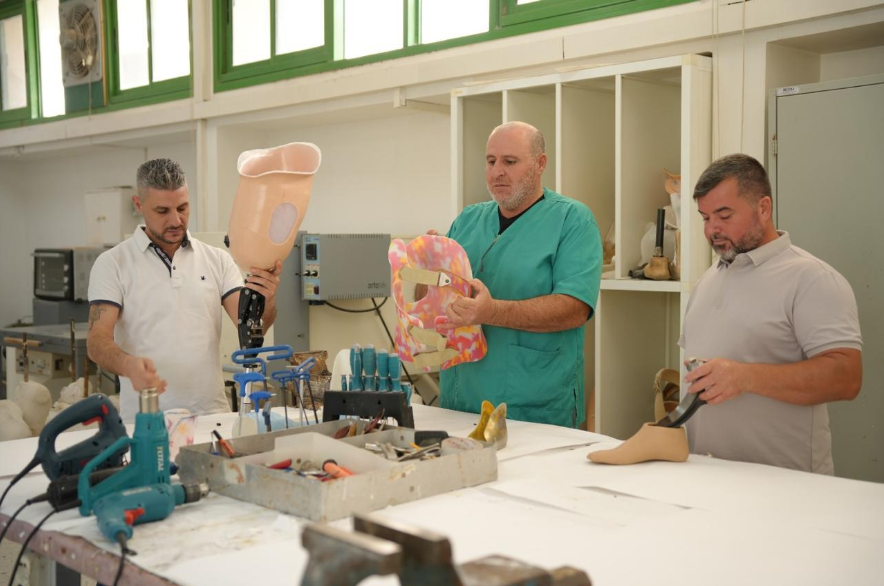
Restoring Mobility, Rebuilding Independence: Prosthetic and Rehabilitation Services for Landmine Survivors
For many years, the Lebanese Welfare Association for the Handicapped (LWAH) has remained committed to supporting landmine survivors through the provision of appropriate prosthetic limbs and orthotic devices. This longstanding commitment reflects the Association's belief that every person who has sustained an injury has the right to access quality rehabilitation services, regain functional abilities, and achieve the greatest possible level of independence.
Prosthetic and orthotic services are among the core rehabilitation services provided by LWAH. Through these services, the Association helps beneficiaries improve their mobility, regain confidence in their physical abilities, and become more independent in their daily lives. Beyond addressing physical needs, these services play an important role in helping individuals return to their everyday activities and participate more fully in family and community life.
LWAH's approach goes beyond the provision of prosthetic limbs and orthotic devices. Recognizing that each person's needs and circumstances are different, the Association follows an individualized rehabilitation process that may include assessment, prosthetic fitting, physiotherapy, rehabilitation exercises, and practical training on the proper use and care of the device. Psychological and social support are also important components of this process, acknowledging the emotional challenges that often accompany limb loss and the journey towards adapting to life after injury.
Through this comprehensive approach, LWAH aims not only to restore mobility and improve physical functioning, but also to help beneficiaries rebuild their confidence, strengthen their independence, and regain an active role in society. As landmine survivors continue to require prosthetic replacements, regular follow-up, maintenance, and ongoing rehabilitation, ensuring the continuity and development of these services remains essential. Sustained support will allow LWAH to respond to beneficiaries' evolving needs, expand access to quality rehabilitation, and continue reaching individuals whose lives have been affected by landmines and other explosive remnants of war.
For LWAH, providing a prosthetic limb is not simply about restoring a lost physical function; it is about helping people move forward, reclaim their independence, and rebuild their lives with dignity.